
My Work
Service and User Experience Designer with 12+ years leading end-to-end experience strategy, research, and service design across banking & finance, telecoms, e-commerce, hospitality, government, and retail. Cross-cultural fluency earned across the US, Spain, UK, and UAE. Proven track record developing scalable experience frameworks, playbooks, and quality standards that translate deep user insight into measurable outcomes.
Experience Strategy
Service & UX Design
Research & Testing

Case Studies
Take a look at some of the projects I have worked on.
Rebuilding Financial Trust in Egypt
An up and coming neobank in Egypt faced a challenge that went deeper than product design. Nearly 70% of Egyptians don't use traditional banks — not out of ignorance, but out of earned distrust. The collapse of unregulated investment companies in the late 1980s wiped out the savings of hundreds of thousands of families, and recurring currency crises did the rest. An entire generation had learned to keep their money in cash.
Through user interviews and surveys, we set out to understand not just the barrier but the behavior. What we found confirmed it: people were already financially active through ATMs and familiar apps like PayPal just entirely outside the banking system. So rather than asking them to change, we designed around what they already knew, building familiar transfer flows, simple peer-to-peer payments, and a tone that felt human rather than institutional.
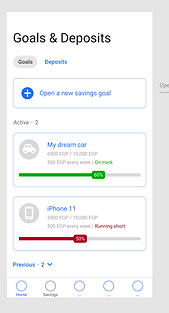
To encourage saving, we introduced a Goals & Deposits feature, letting users set savings targets tied to real aspirations like a car or a phone making the abstract concept of banking tangible and motivating. The result was a product that didn't ask Egyptians to become bankers. It met them where they were, and brought banking to them.


Research & Testing
Experience Strategy
Service & UX Design
Research & Testing
Awakening a Sleeping Loyalty Program
A leading Abu Dhabi property developer had built a loyalty program with genuinely compelling rewards across their malls, hotels, and commercial centers. On paper, market-leading. In practice, 90% of members never used it.
As Lead Experience Consultant, I combined quantitative and qualitative research to diagnose the problem: the acquisition-retention funnel was broken. Members were joining but never activating — they didn't understand the value, couldn't navigate where to earn and redeem, and had no reason to return. Through personas and journey mapping across two distinct audiences — hotel guests and mall shoppers — the strategy became clear: stop acquiring and start reactivating.
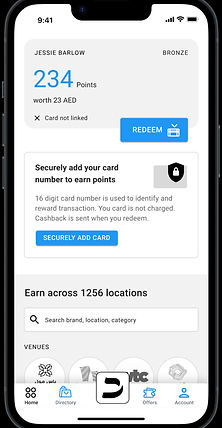
Hotel guests wanted tangible hospitality benefits — early check-in, late check-out, upgrades. Shoppers wanted rewards that crossed industries. We unified both: points earned at a mall could be redeemed at a hotel, spa, or golf club — and vice versa. Integrating card-linked (CLO) technology delivered automatic cashback directly to members' cards at every outlet — no logging in, no redeeming, no friction. That single change turned a dormant program into an active lifestyle platform.



Experience Strategy
Service Design
Breaking Down Barriers, Building Better Design
A prominent telecommunications partner had a problem that couldn't be solved with better software. Their internal design team was fragmented — design, management, and project leads working in silos, misaligned on principles, creating bottlenecks that slowed the entire organization down. The fix wasn’t just a new process. It was getting the right people in the same room — to see the problem through each other's eyes, break down the walls that daily workflows had built between them, and leave with a shared language for how good design should work.
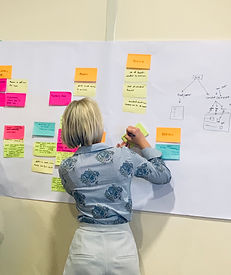
I designed and facilitated a 3-day design sprint with intentionally mixed groups — bringing together members from across departments so each could understand the other's perspective and pain points. Day one broke down formal barriers, creating space for honest conversation regardless of seniority. Day two introduced design thinking in ways accessible to non-designers. Day three was collaborative synthesis — teams independently defined what good and bad design looked like in their context, then came together to vote on the strongest principles and align on workflow checkpoints to prevent bottlenecks.
The output wasn't a deck or a report. It was a set of co-created design principles — built by the team, owned by the team. No interface, no prototype. Just people, trust, and shared principles.


Experience Strategy
Service & UX Design
Selling the Story,
Not the Product
A luxury jewelry brand's online presence was failing to convert — less than 1% of visitors made a purchase. The product was exquisite. The digital experience was anything but. Data analysis revealed a critical drop-off: 84% of users abandoned by the second page, and only 0.36% followed through to checkout.
The core problem wasn't technical — it was a failure of storytelling. The website was treating handcrafted, one-of-a-kind pieces the same way a supermarket treats tinned goods, nothing communicated the hours of craftsmanship behind each piece or the cultural heritage of the designs. The brand had a world worth inhabiting but the website offered no way in.
Through expert audit, competitive benchmarking, and stakeholder workshops we uncovered what was missing: aspiration. Competitors weren't just selling jewelry — they were selling identity, occasion, and desire. We defined a new creative direction that repositioned the brand from a product catalogue to a lifestyle world — where every page communicated not just what the piece looked like, but what it felt like to own it, wear it, and be seen in it. A live Instagram feed was integrated directly into the checkout page, surfacing real people wearing and rating the jewelry at the exact moment of hesitation.
The result was a dramatic increase in online sales and a digital presence that finally matched the quality of the product it represented.



Educating the Educators
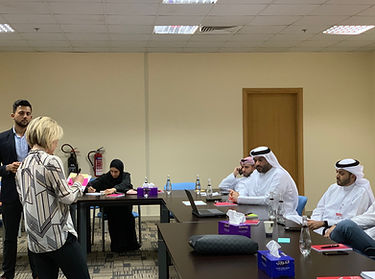
The UAE Ministry of Education commissioned a research project to improve and modernize the national school platform used daily by teachers, students, and parents across public schools — for grade documentation, assignment management, and attendance tracking.
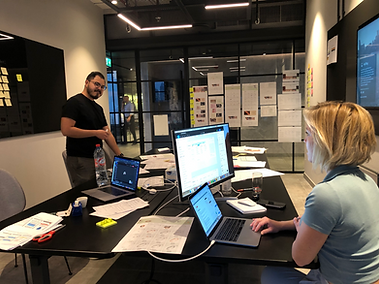
The platform served a bilingual user base — all interfaces existed in both English and Arabic. To ensure research accurately reflected real user needs, interviews were conducted in both languages, with a translator facilitating Arabic sessions and with teachers who use the platform on a daily basis. This cross-cultural approach was essential in surfacing the distinct behaviors and challenges of each user group.
I conducted workshops with various users and stakeholders of the platform. The insights and research findings were synthesized into customer journey maps and recommendations of key features that redesigned the platform experience for all three user types — adapting design solutions to reflect the cultural context and practical needs of UAE public school users at a national scale.


Experience Strategy
Service & UX Design

Service & UX Design
Research & Testing
Bank's Leap to Digital Efficiency
A distinguished corporate UAE bank needed to improve both its customer experience and internal operational efficiency. Redundant workflows and manual processes across departments were creating friction for customers and increasing workload for banking staff.
Commissioned to lead a service design engagement, we conducted interviews, surveys and in-depth conversations with customers and internal stakeholders across all banking segments — from c-level executives to relationship managers and branch tellers — to understand how work actually flowed through the organization.
We mapped existing end-to-end service blueprints and customer journeys across every department, identifying pain points and redundant processes for both customers and staff. We then redesigned the ideal service flows — eliminating unnecessary steps, streamlining employee workflows, and defining a digital roadmap that improved the experience holistically for all banking segments.


Service & UX Design
Building a Platform That Scales
A major UAE developer operating a diverse portfolio of hospitality and entertainment venues was managing bookings entirely through manual processes — phone calls, emails, and back-and-forth coordination across multiple teams. The aim was to digitize, but the real opportunity was bigger than one venue.
Through expert audit, competitive benchmarking, and rapid guerrilla user testing with real customers, we identified the core friction points in the booking journey. But rather than solving for a single venue in isolation, we designed a scalable platform template — a flexible, modular system that could be configured and deployed across the developer’s wider portfolio of business outlets.
The result was a platform that didn’t just digitize bookings for one venue — it gave the entire organization a reusable design infrastructure. Rolled out across 12+ venues and business outlets, it standardized the customer experience, dramatically reduced administrative overhead, and increased online conversions enabling cross selling and upselling — all from a single design system.
The results:
12 venues integrated through one site
40% increase in online transactions


Experience Strategy
Service & UX Design
Data Driven Desgin
A leading UAE telecom was hemorrhaging potential customers online — 16 million users visited their digital channels, yet 86% abandoned before completing a purchase. The assumption internally was that the website needed a visual refresh. The reality was more complicated.
Through expert audit, competitive benchmarking, data analysis, and in-store user interviews, we uncovered two distinct problems. The first was creative: customers weren't avoiding digital out of habit — they were seeking a sales rep who could translate abstract data packages into real life. We redesigned around how customers actually think — renaming packages around real usage profiles: Gamer, Social, Traveler — each broken down into tangible equivalents like hours of Netflix or gaming.
The second problem was structural. The online sign-up process required excessive documentation that drove customers straight to stores — which were becoming overwhelmed, with wait times that damaged the brand further. Fixing this required more than design. We presented research evidence and competitive analysis to convince stakeholders to streamline their sign-up process, removing arbitrary documentation requirements that were actively pushing customers away.
The stakeholders agreed. Processes were simplified. The result: 86% improvement in bounce rate and 20% increase in online transactions — within 3 months.


